Here is the critical appraisal you requested – focused purely on the film as on-screen art: Ramayana: Part 1 – A Critical Appraisal of the On-Screen Art
Here is the critical appraisal you requested – focused purely on the film as on-screen art: Ramayana: Part 1 – A Critical Appraisal of the On-Screen Art
Director Nitesh Tiwari approaches the subject with clear reverence for the scale, and that intent defines the film’s artistic choices.
1. Narrative Structure & Screenplay:
The decision to open with Ravana’s origin is an ambitious artistic choice. It establishes a strong antagonist arc early, but it also delays the audience’s entry into Ayodhya. As an adaptation choice, it creates two distinct first-acts in one film. The transition from Ravana’s dark descent to the vibrant, celebratory Ayodhya sequences is visually jarring, though intentionally so. The first half excels in world-building – the Ayodhya set design, the Gurukul of Vishwamitra, and the Sita Swayamvar are mounted on an impressive scale.
The second half, following Kaikeyi’s boons and the exile, suffers from pacing. The screenplay moves too seamlessly between grand spectacles, leaving little breathing room for the emotional weight of the exile itself. The trials in the wilderness feel rushed compared to the detailed establishment of the palace.
2. Direction & Visual Craft:
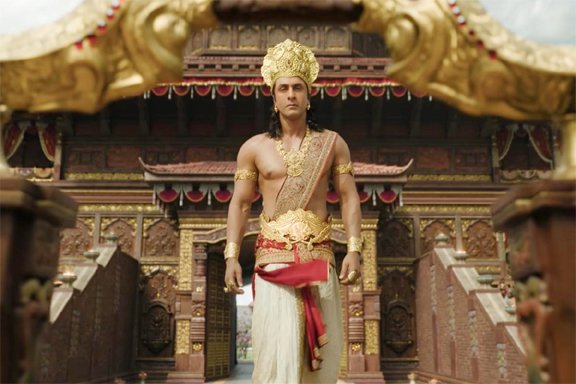
Tiwari’s strength in human drama is evident in the intimate scenes between Dasharatha and his sons, and between the four brothers. Where the film struggles is in balancing VFX with emotion. The grandeur of Ayodhya is spectacular – rich costume design, practical sets blended with CGI – but at times the spectacle overshadows the performance.
The action choreography in Vishwamitra’s forest is well-staged, but the visual effects for the astras are inconsistent – impressive in wide shots, less convincing in close-ups.
3. Performances & Music:
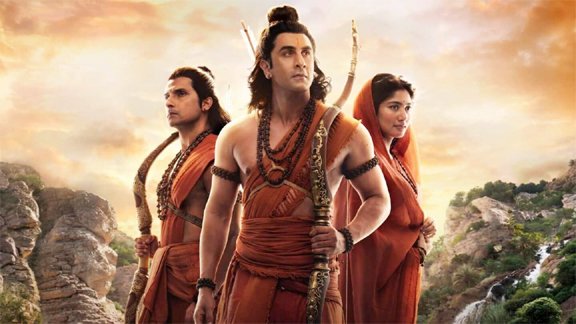
The casting carries the film’s devotional weight. The actors portraying Rama and Sita embody grace and restraint, which aligns with Tiwari’s stated goal of showing triumph through virtue rather than aggression. Ravana’s portrayal is layered in the first act but leans towards a more conventional antagonist by the interval.
A.R. Rahman’s background score is a major pillar of the art. It elevates the Ayodhya sequences and brings solemnity to the exile, though it occasionally overpowers dialogue in the forest scenes.
Verdict as Art:
As a piece of cinema, it is an earnest, large-scale attempt to translate faith into visual spectacle. It succeeds as a grand introduction and in its production design, but as a narrative film, Part 1 feels like all setup. The artistic triumph is in its sincerity and scale; the artistic trial is in its pacing and its reliance on VFX to carry emotional moments that needed more quiet.

Here is the critical appraisal you requested - focused purely on the film as on-screen art: Ramayana: Part 1 - A Critical Appraisal of the On-Screen Art
Director Nitesh Tiwari approaches the subject with clear reverence for the scale, and that intent defines the film's artistic choices.
1. Narrative Structure & Screenplay:
The decision to open with Ravana's origin is an ambitious artistic choice. It establishes a strong antagonist arc early, but it also delays the audience's entry into Ayodhya. As an adaptation choice, it creates two distinct first-acts in one film. The transition from Ravana's dark descent to the vibrant, celebratory Ayodhya sequences is visually jarring, though intentionally so. The first half excels in world-building - the Ayodhya set design, the Gurukul of Vishwamitra, and the Sita Swayamvar are mounted on an impressive scale.
The second half, following Kaikeyi's boons and the exile, suffers from pacing. The screenplay moves too seamlessly between grand spectacles, leaving little breathing room for the emotional weight of the exile itself. The trials in the wilderness feel rushed compared to the detailed establishment of the palace.
2. Direction & Visual Craft:
Tiwari's strength in human drama is evident in the intimate scenes between Dasharatha and his sons, and between the four brothers. Where the film struggles is in balancing VFX with emotion. The grandeur of Ayodhya is spectacular - rich costume design, practical sets blended with CGI - but at times the spectacle overshadows the performance.
The action choreography in Vishwamitra's forest is well-staged, but the visual effects for the astras are inconsistent - impressive in wide shots, less convincing in close-ups.
3. Performances & Music:
The casting carries the film's devotional weight. The actors portraying Rama and Sita embody grace and restraint, which aligns with Tiwari's stated goal of showing triumph through virtue rather than aggression. Ravana's portrayal is layered in the first act but leans towards a more conventional antagonist by the interval.
A.R. Rahman's background score is a major pillar of the art. It elevates the Ayodhya sequences and brings solemnity to the exile, though it occasionally overpowers dialogue in the forest scenes.
Verdict as Art:
As a piece of cinema, it is an earnest, large-scale attempt to translate faith into visual spectacle. It succeeds as a grand introduction and in its production design, but as a narrative film, Part 1 feels like all setup. The artistic triumph is in its sincerity and scale; the artistic trial is in its pacing and its reliance on VFX to carry emotional moments that needed more quiet.