Laxmikant: The Musical Genius Behind 500+ Hindi Films
Laxmikant, one half of the legendary composer duo Laxmikant-Pyarelal, was perhaps one of the most prolific music directors in Hindi cinema and composed music for over 500 movies from 1963 to 1998.
Mumbai: Laxmikant was born “Laxmikant Shantaram Kudalkar” on November 3, 1937, in Bombay. After the untimely demise of his father, the financial constraints of his family meant that he could not pursue formal academic education. However, destiny had a different plan for him.
Encouraged by his father’s friend, Laxmikant, along with his elder brother, delved into the world of music. He started his musical education under renowned mandolin player Hussain Ali. He later learnt the violin from Husnalal of Husanlal-Bhagatram fame. Laxmikant also acted as a child actor in films like Bhakt Pundalik (1949), Aankhen (1950), and some Gujarati films.
Laxmikant was an expert mandolin player from an early age and started playing in orchestras and on musical nights. He even played in a concert by none other than “Lata Mangeshkar” in the Radio Club when he was only 10 years old. Lata Ji was very impressed and talked to him, which led to his joining “Sureel Kala Kendra, a music academy for children that is being run by the Mangeshkar family. In the academy, Laxmikant met Pyarelal, a gifted man who was an expert violinist. They hit it off immediately, forming a lifelong bond that lasted until Laxmikant died in 1998.
After Lata Ji learnt about their financial difficulties, she recommended them to music directors like Naushad, S. D. Burman, and C. Ramchandra. In 1953, they became assistants of Kalyanji-Anandji, a collaboration that lasted until 1963, when they started working independently.
Their first film as an independent music director was Babubhai Mistry’s fantasy epic “Parasmani (1963).” The film was a low-budget fare, but Lata Ji and Rafi Saab, whom Laxmikant Pyarelal (LP) considered their mentor, sang for them for a nominal fee (reportedly Rafi sang for free), and the result was that songs like “Hansta Hua Noorani Chehra,” “Ooi Maa, Yeh Kya Ho Gaya,” “Woh Jab Yaad Aaye,” and “Roshan Tum Hi Se Duniya” were instant hits and considered classics even today. “Hansta Hua Noorani Chehra” was the first song to make it to Binaca Geetmala, the only countdown, and a testament to the popularity of any song. For the next four decades, LP ruled “Geetmala.” For many years, more than half of the songs featured in the list belonged to them.
Their next movie, “Dosti,” earned them the first Filmfare Best Music Director Award and established them as a force in the music industry. The songs “Chaahunga Main Tujhe Sanjh Savere,” “Mera To Jo Bhi Kadam Hai,” “Koi Jab Raah Na Paaye,” “Raahi Manwa Dukh Ki Chinta,” and “Jaanewalon Zara Mudke Dekho Mujhe,” sung by Mohammed Rafi, are some of the finest songs ever made.
They won the Filmfare Best Music Director Award six more times: Jeene Ki Raah (1969), Amar Akbar Anthony (1977), Satyam Shivam Sundaram (1978), Sargam (1979), and Karz (1980). Additionally, they nominated for the same award for 18 more films: Do Raaste (1969), Shor (1972), Bobby (1973), Daag: A Poem of Love (1973), Roti Kapda Aur Makaan (1974), Dulhan (1975), Jaani Dushman (1979), Aasha (1980), Ek Duuje Ke Liye (1981), Prem Rog (1982), Hero (1983), Meri Jung (1985), Pyaar Jhukta Nahin (1985), Sur Sangam (1986), Tezaab (1988), Ram Lakhan (1989), Saudagar (1991), and Khalnayak (1993).
Laxmikant-Pyarelal were known for their ability to compose in a variety of musical styles, from classical and folk to Western and contemporary. Their music was characterised by rich orchestration, memorable melodies, and a keen understanding of the film’s story and situation.
The duo went on to give music in films like “Aaye Din Bahar Ke,” “Pyar Kiye Jaa,” “Sati Savitri,” “Sant Gyaneshwar,” “Mr. X in Bombay,” “Anita,” “Shagird,” “Patthar Ke Sanam,” “Night in London,” “Aya Sawan Jhoom Ke,” “Mere Hamdam Mere Dost,” “Dharam Veer,” “Jaal,” “Intaquam,” “Sharafat,” “Abhinetri,” “Mera Gaon Mera Desh,” “Raja Jani,” “Mehboob Ki Mehdi,” “Hero,” “Utsav,” “Naam,” “Nagina,” “Mr India,” “Chaalbaaz,” “Hum,” “Khuda Gawah,” and “Deewana Mastana.”
They worked with almost all the top singers of their time, including Lata Mangeshkar (712 songs), Kishore Kumar (402 songs), Mohammed Rafi (379 songs), and Asha Bhosle (494 songs). They also worked with Mukesh, Manna Dey, Mahendra Kapoor, Amit Kumar, Alka Yagnik, Udit Narayan, Shailender Singh, P. Susheela, K. J. Yesudas, S. P. Balasubrahmanyam, K.S. Chithra, S. Janaki, and Anuradha Paudwal. They were also instrumental in giving breaks and mentoring singers like Kavita Krishnamurthy, Mohammed Aziz, Suresh Wadkar, Shabbir Kumar, Sukhwinder Singh, Vinod Rathod, and Roop Kumar Rathod.
Some notable songs in the 1960s and 1970s include “Dil Vil Pyar Vyar” by Shagird (1968), “Kaise Rahu Chup,” “Aa Jaane Jaan” by Intaquam (1969),” “Aane uske aaye bahar” – Jeene Ki Raah (1969), “Mere Mehboob Qayamat Hogi” – “Mr. X in Bombay (1964),” “Sawan Ka Mahina” and “Bol Gori Bol,” Milan” (1967), “Koi Nahin Hai Phir Bhi Hai Mujhko” “Tauba Yeh Matwali Chaal” – Patthar Ke Sanam (1967), “Bindiya Chamkegi” “Ye Reshmi zulfen” “Tune kajal lagaya” – Do Raaste (1969), Patta Patta Buta Buta Hal Hamara Jane – Ek Nazar (1972), “Ek Pyar Ka Nagma Hai” – Shor (1972), “Aaj Mausam Bada Beimaan Hai,” “Koi Shehri Babu” – Loafer (1973), “Bane Chahe Dushman Zamana Hamara” – Dostana (1974), “Main Shayar To Nahin” “Hum Tum Ek Kamre Mein Band Ho” – Bobby (1973), “My Name Is Anthony Gonsalves” “Parda Hai Parda” – Amar Akbar Anthony (1977).”
Laxmikant and Pyarelal complemented each other perfectly, with Laxmikant often focusing on composing melodies and Pyarelal on orchestration and arrangements. Their collaboration was not just professional but also personal, marked by a strong bond of friendship.
Some of their songs in the 80s and 90s were “Ek Hasina Thi,“ “Om Shanti Om,” “Dard-e-Dil” by Karz (1980), “Tera Saath Hai To” – Pyaasa Sawan (1981), “Tere Mere Beech Mein” – Ek Duuje Ke Liye (1980), “Yeh Galiyan Yeh Chaubara” – Prem Rog (1982), “Lambi Judai” – Hero (1983), “Man Kyon Behka re Behka” (Utsav, -1985), Yashoda ka Nand lala (Sanjog – 1985),” “Chithi Aayi Hai (Naam -1986),” “Main Teri Dushman (Nagina -1986),” “Hawa Hawai,” “Kaate Nahin Katte” – Mr India (1987), “Ek Do Teen (Tezaab – 1988),” “Na Jaane Kahan Se Aayi Hai (Chalbazz, 1989),” “Ilu Ilu” “Imli Ka Boota” – Saudagar (1991), “Tera Naam Liya” “O raamji, Bada Dukh Ninha (Ram Lakhan, 1989),” “Jumma Chumma De De (Hum,1991),” “Choli Ke Peeche (Khalnayak, 1993).
Laxmikant was married to Jaya, who is the sister of the famous actress Bindu. His son Rishikesh Raj (Kudalkar) debuted in the film Dilbar (1994), opposite Mamta Kukarni. His other son, Abhijeet Kudalkar, is a TV serial producer, and his daughter, Rajeswari, is a singer.
Laxmikant’s untimely death on May 25, 1998, left a void in the music industry, but his legacy continues through the timeless music he left behind. After his death, Pyarelal cut off his work and has since been in semiretirement, only working occasionally.

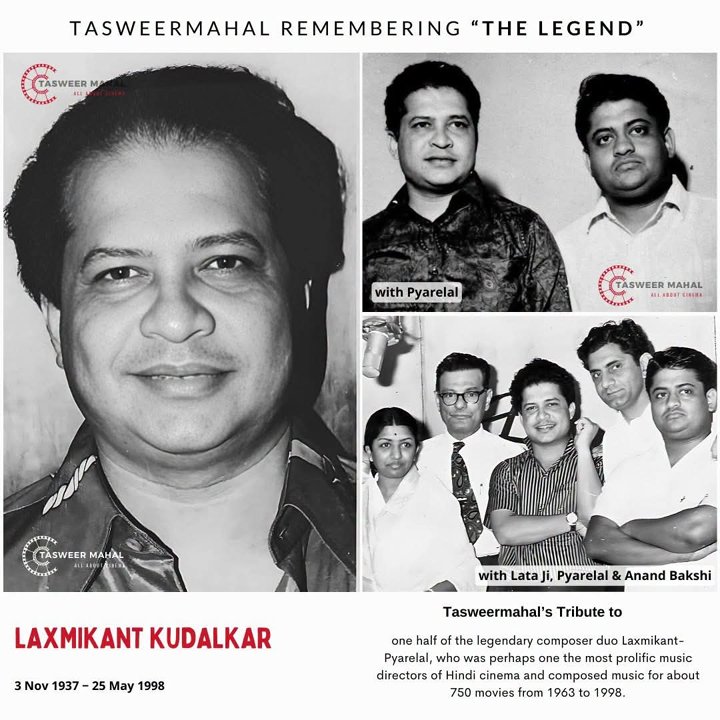
Laxmikant, one half of the legendary composer duo Laxmikant-Pyarelal, was perhaps one of the most prolific music directors in Hindi cinema and composed music for over 500 movies from 1963 to 1998.
Mumbai: Laxmikant was born "Laxmikant Shantaram Kudalkar" on November 3, 1937, in Bombay. After the untimely demise of his father, the financial constraints of his family meant that he could not pursue formal academic education. However, destiny had a different plan for him.
Encouraged by his father's friend, Laxmikant, along with his elder brother, delved into the world of music. He started his musical education under renowned mandolin player Hussain Ali. He later learnt the violin from Husnalal of Husanlal-Bhagatram fame. Laxmikant also acted as a child actor in films like Bhakt Pundalik (1949), Aankhen (1950), and some Gujarati films.
Laxmikant was an expert mandolin player from an early age and started playing in orchestras and on musical nights. He even played in a concert by none other than "Lata Mangeshkar" in the Radio Club when he was only 10 years old. Lata Ji was very impressed and talked to him, which led to his joining "Sureel Kala Kendra, a music academy for children that is being run by the Mangeshkar family. In the academy, Laxmikant met Pyarelal, a gifted man who was an expert violinist. They hit it off immediately, forming a lifelong bond that lasted until Laxmikant died in 1998.
After Lata Ji learnt about their financial difficulties, she recommended them to music directors like Naushad, S. D. Burman, and C. Ramchandra. In 1953, they became assistants of Kalyanji-Anandji, a collaboration that lasted until 1963, when they started working independently.
Their first film as an independent music director was Babubhai Mistry's fantasy epic "Parasmani (1963)." The film was a low-budget fare, but Lata Ji and Rafi Saab, whom Laxmikant Pyarelal (LP) considered their mentor, sang for them for a nominal fee (reportedly Rafi sang for free), and the result was that songs like "Hansta Hua Noorani Chehra," "Ooi Maa, Yeh Kya Ho Gaya," "Woh Jab Yaad Aaye," and "Roshan Tum Hi Se Duniya" were instant hits and considered classics even today. "Hansta Hua Noorani Chehra" was the first song to make it to Binaca Geetmala, the only countdown, and a testament to the popularity of any song. For the next four decades, LP ruled "Geetmala." For many years, more than half of the songs featured in the list belonged to them.
Their next movie, "Dosti," earned them the first Filmfare Best Music Director Award and established them as a force in the music industry. The songs "Chaahunga Main Tujhe Sanjh Savere," "Mera To Jo Bhi Kadam Hai," "Koi Jab Raah Na Paaye," "Raahi Manwa Dukh Ki Chinta," and "Jaanewalon Zara Mudke Dekho Mujhe," sung by Mohammed Rafi, are some of the finest songs ever made.
They won the Filmfare Best Music Director Award six more times: Jeene Ki Raah (1969), Amar Akbar Anthony (1977), Satyam Shivam Sundaram (1978), Sargam (1979), and Karz (1980). Additionally, they nominated for the same award for 18 more films: Do Raaste (1969), Shor (1972), Bobby (1973), Daag: A Poem of Love (1973), Roti Kapda Aur Makaan (1974), Dulhan (1975), Jaani Dushman (1979), Aasha (1980), Ek Duuje Ke Liye (1981), Prem Rog (1982), Hero (1983), Meri Jung (1985), Pyaar Jhukta Nahin (1985), Sur Sangam (1986), Tezaab (1988), Ram Lakhan (1989), Saudagar (1991), and Khalnayak (1993).
Laxmikant-Pyarelal were known for their ability to compose in a variety of musical styles, from classical and folk to Western and contemporary. Their music was characterised by rich orchestration, memorable melodies, and a keen understanding of the film's story and situation.
The duo went on to give music in films like "Aaye Din Bahar Ke," "Pyar Kiye Jaa," "Sati Savitri," "Sant Gyaneshwar," "Mr. X in Bombay," "Anita," "Shagird," "Patthar Ke Sanam," "Night in London," "Aya Sawan Jhoom Ke," "Mere Hamdam Mere Dost," "Dharam Veer," "Jaal," "Intaquam," "Sharafat," "Abhinetri," "Mera Gaon Mera Desh," "Raja Jani," "Mehboob Ki Mehdi," "Hero," "Utsav," "Naam," "Nagina," "Mr India," "Chaalbaaz," "Hum," "Khuda Gawah," and "Deewana Mastana."
They worked with almost all the top singers of their time, including Lata Mangeshkar (712 songs), Kishore Kumar (402 songs), Mohammed Rafi (379 songs), and Asha Bhosle (494 songs). They also worked with Mukesh, Manna Dey, Mahendra Kapoor, Amit Kumar, Alka Yagnik, Udit Narayan, Shailender Singh, P. Susheela, K. J. Yesudas, S. P. Balasubrahmanyam, K.S. Chithra, S. Janaki, and Anuradha Paudwal. They were also instrumental in giving breaks and mentoring singers like Kavita Krishnamurthy, Mohammed Aziz, Suresh Wadkar, Shabbir Kumar, Sukhwinder Singh, Vinod Rathod, and Roop Kumar Rathod.
Some notable songs in the 1960s and 1970s include "Dil Vil Pyar Vyar" by Shagird (1968), "Kaise Rahu Chup," "Aa Jaane Jaan" by Intaquam (1969)," "Aane uske aaye bahar" - Jeene Ki Raah (1969), “Mere Mehboob Qayamat Hogi” - "Mr. X in Bombay (1964)," "Sawan Ka Mahina" and "Bol Gori Bol," Milan" (1967), "Koi Nahin Hai Phir Bhi Hai Mujhko" "Tauba Yeh Matwali Chaal" - Patthar Ke Sanam (1967), “Bindiya Chamkegi” "Ye Reshmi zulfen" "Tune kajal lagaya" - Do Raaste (1969), Patta Patta Buta Buta Hal Hamara Jane - Ek Nazar (1972), “Ek Pyar Ka Nagma Hai” - Shor (1972), "Aaj Mausam Bada Beimaan Hai," "Koi Shehri Babu" - Loafer (1973), “Bane Chahe Dushman Zamana Hamara” - Dostana (1974), “Main Shayar To Nahin” “Hum Tum Ek Kamre Mein Band Ho” - Bobby (1973), “My Name Is Anthony Gonsalves” “Parda Hai Parda” - Amar Akbar Anthony (1977)."
Laxmikant and Pyarelal complemented each other perfectly, with Laxmikant often focusing on composing melodies and Pyarelal on orchestration and arrangements. Their collaboration was not just professional but also personal, marked by a strong bond of friendship.
Some of their songs in the 80s and 90s were "Ek Hasina Thi,“ "Om Shanti Om,” “Dard-e-Dil” by Karz (1980), "Tera Saath Hai To" - Pyaasa Sawan (1981), "Tere Mere Beech Mein" - Ek Duuje Ke Liye (1980), "Yeh Galiyan Yeh Chaubara" - Prem Rog (1982), “Lambi Judai” - Hero (1983), "Man Kyon Behka re Behka" (Utsav, -1985), Yashoda ka Nand lala (Sanjog - 1985)," "Chithi Aayi Hai (Naam -1986)," "Main Teri Dushman (Nagina -1986)," "Hawa Hawai," "Kaate Nahin Katte" - Mr India (1987), "Ek Do Teen (Tezaab - 1988)," "Na Jaane Kahan Se Aayi Hai (Chalbazz, 1989)," "Ilu Ilu" "Imli Ka Boota" - Saudagar (1991), “Tera Naam Liya” "O raamji, Bada Dukh Ninha (Ram Lakhan, 1989)," “Jumma Chumma De De (Hum,1991)," “Choli Ke Peeche (Khalnayak, 1993).
Laxmikant was married to Jaya, who is the sister of the famous actress Bindu. His son Rishikesh Raj (Kudalkar) debuted in the film Dilbar (1994), opposite Mamta Kukarni. His other son, Abhijeet Kudalkar, is a TV serial producer, and his daughter, Rajeswari, is a singer.
Laxmikant's untimely death on May 25, 1998, left a void in the music industry, but his legacy continues through the timeless music he left behind. After his death, Pyarelal cut off his work and has since been in semiretirement, only working occasionally.