‘Our Family Has Been Celebrating Kojagari Laxmi Pujo for Over 150 Years,’ Says Pallaavii Chatterjee
‘Our Family Has Been Celebrating Kojagari Laxmi Pujo for Over 150 Years,’ Says Pallaavii Chatterjee
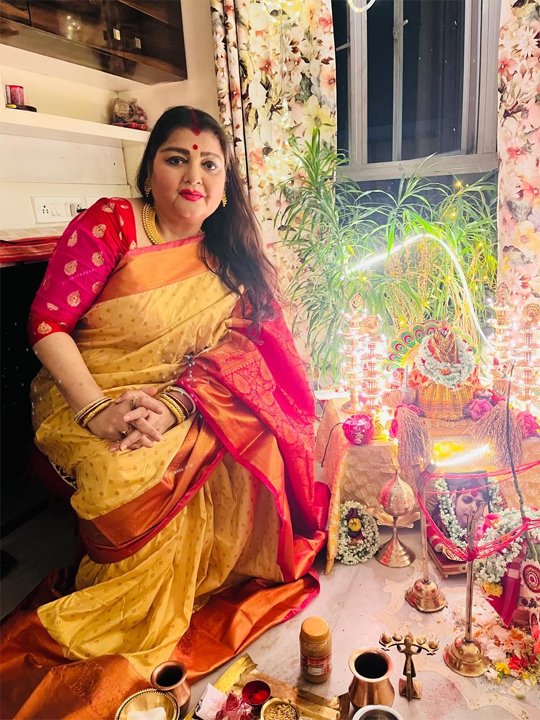
Mumbai: Actor Pallaavii Chatterjee, who was recently seen in the web series The Revolutionaries, directed by Nikkhil Advani, considers Kojagari Laxmi Pujo much more than a festival. It is a family tradition that has been passed down through generations for over 150 years. Having taken over the responsibility from her late mother, Mrs Ratna Chatterjee, Pallaavii has been performing the puja at her Kolkata home for 25 years, and this year marks her 26th year of celebrating the festival.
From personally shopping for the puja essentials and following the rituals to preparing traditional Bengali bhog and cleaning and decorating the house, she continues to follow the traditions she grew up watching her mother observe. The festival also brings together her close friends, colleagues and people from different walks of life, turning her home into a place of devotion, warmth and togetherness. It is almost like a Bijoya Dashami get-together, where everyone comes together to meet and greet one another.
Talking about what Kojagari Laxmi Pujo means to her, Pallaavii says, “It is very, very special to me because my family has been performing this puja for more than 150 years. It has come down from one generation to another. My mother used to perform it, and she passed the responsibility on to me. I follow the same traditions and rituals that she followed. Initially, I used to celebrate it on a small scale, but gradually, it has grown by the grace of Maa Laxmi. Today, people know it as Lakshmi Puja at Pallaavii’s or Maku’s house. And when I say family, I don’t mean only blood relatives. My close friends and people who are like family to me are all part of it. They come to seek Maa’s blessings, have bhog and meet me.”
The actor reveals that she has been organising the puja at her home for 26 years and personally takes care of the preparations. “I have been performing Lakshmi Puja at home for 26 years now. I enjoy doing the shopping myself. I have just arrived in Kolkata, and I go to my regular vendors in Gariahat to buy everything I need. I don’t like ordering everything online. In a flat, you have to make space for the arrangements, and the temple and the entire puja area are cleaned and prepared. It almost feels like the preparations for Diwali. The rituals include making alpona (similar to rangoli), decorating the house and arranging everything for Maa. The entire process requires a lot of attention to detail. It is almost like preparing for your daughter’s wedding. You want everything to be perfect.”
Speaking about the traditional bhog prepared for the occasion, she adds, “I prepare the bhog every year, which usually consists of luchi, khichdi and paanch bhaja. We make begun bhaja, aloo bhaja, kumro bhaja, potol bhaja and bori bhaja, along with aloo-kopi dalna, aloo dum, paneer matar, chutney and payesh, among other things. I also prepare naru (similar to laddoos) at home, some with grated coconut and jaggery and others with sugar. I make sure that the traditional preparations remain a part of the puja.”
Recalling her childhood memories of Kojagari Laxmi Puja, Pallaavii says the celebrations used to continue for four days. “My fondest memories are of the four-day Lakshmi Puja celebrations we used to have. The first day was dedicated to the puja. On the second day, we would have Narayan bhojan, and in the evening, all the cousins and relatives would participate in plays, musical performances and other activities. On the third day, people from the film industry would come to visit, and the fourth day was reserved for the immersion. The immersion used to be a huge celebration. It was a very exciting time for us as children, and those memories have stayed with me.”Having grown up watching the women in her family prepare for the festival, Pallaavii says her mother’s influence continues to guide her. “I grew up watching my mother, Mrs Ratna Chatterjee, do everything for the puja. The women in the family would sit together, peel potatoes and prepare vegetables. In those days, we used to cook on a chulha instead of a gas stove. There would be huge kadhais, and people would come to help with the cooking. My mother would prepare the main bhog herself. I have learnt by watching her, and today, I do exactly what she used to do. I intend to continue following these traditions for the rest of my life.”
One of the most cherished aspects of the celebration is the family idol of Goddess Lakshmi, which has been preserved for generations. “We have a small, delicate idol of Maa Lakshmi made of silver. We don’t buy a new idol from the market every year, and there is no immersion. The idol stays with us throughout the year. I handle her very carefully, clean her myself, decorate her, do her makeup and get her ready for the puja before placing her in the temple again. It is a very personal tradition for me because the idol has been with our family for so long,” she shares.
For Pallaavii, maintaining this tradition also means making time for it despite her professional commitments. She says, “By the grace of God, I have been able to balance everything. I believe that if Maa doesn’t want you to perform her puja, you won’t be able to do it. I have always made it clear that these two or three days of the year are reserved for the puja, no matter what work I have. Even in 2025, I had to travel to Japan for the shoot of The Revolutionaries, but I informed the team before signing the project that I would not be available on the day of the puja or the day before it. They were aware of my commitment, and I made sure that I could be home for the celebrations.”
Talking about the dish that makes her nostalgic, the actress says, “The payesh my mother used to make is something I always remember. We also have a special thali and utensils for Maa, which have been in the family for ages. The thali is made of pure white marble, and I use it to serve the food prepared for her. These little things carry so many memories and make the festival even more meaningful.”
The celebrations also include alpona, decorations and a havan performed with 108 bel patta. Pallaavii says her home remains open to anyone who wishes to seek the Goddess’s blessings. “We make alpona, decorate the puja space and arrange everything with a lot of love. Anyone who wishes to participate in the puja is welcome. It is an open house, and people from different backgrounds come together with faith and devotion. They may be businessmen, actors, musicians, writers or people leading very simple lives. Everyone comes with the same intention of seeking Maa’s blessings and having bhog. I feel blessed when I see people coming together, enjoying the celebrations and receiving Maa’s prasad. For me, that is the true spirit of the festival.”Pallaavii has had a long career in the entertainment industry, having worked in over 150 films, 75 television shows, theatre, jatra and musical shows. Having moved to Mumbai three years ago, she has started afresh and begun her journey as an actor from scratch.

‘Our Family Has Been Celebrating Kojagari Laxmi Pujo for Over 150 Years,’ Says Pallaavii Chatterjee
Mumbai: Actor Pallaavii Chatterjee, who was recently seen in the web series The Revolutionaries, directed by Nikkhil Advani, considers Kojagari Laxmi Pujo much more than a festival. It is a family tradition that has been passed down through generations for over 150 years. Having taken over the responsibility from her late mother, Mrs Ratna Chatterjee, Pallaavii has been performing the puja at her Kolkata home for 25 years, and this year marks her 26th year of celebrating the festival.
From personally shopping for the puja essentials and following the rituals to preparing traditional Bengali bhog and cleaning and decorating the house, she continues to follow the traditions she grew up watching her mother observe. The festival also brings together her close friends, colleagues and people from different walks of life, turning her home into a place of devotion, warmth and togetherness. It is almost like a Bijoya Dashami get-together, where everyone comes together to meet and greet one another.
Talking about what Kojagari Laxmi Pujo means to her, Pallaavii says, “It is very, very special to me because my family has been performing this puja for more than 150 years. It has come down from one generation to another. My mother used to perform it, and she passed the responsibility on to me. I follow the same traditions and rituals that she followed. Initially, I used to celebrate it on a small scale, but gradually, it has grown by the grace of Maa Laxmi. Today, people know it as Lakshmi Puja at Pallaavii’s or Maku’s house. And when I say family, I don't mean only blood relatives. My close friends and people who are like family to me are all part of it. They come to seek Maa's blessings, have bhog and meet me.”
The actor reveals that she has been organising the puja at her home for 26 years and personally takes care of the preparations. “I have been performing Lakshmi Puja at home for 26 years now. I enjoy doing the shopping myself. I have just arrived in Kolkata, and I go to my regular vendors in Gariahat to buy everything I need. I don't like ordering everything online. In a flat, you have to make space for the arrangements, and the temple and the entire puja area are cleaned and prepared. It almost feels like the preparations for Diwali. The rituals include making alpona (similar to rangoli), decorating the house and arranging everything for Maa. The entire process requires a lot of attention to detail. It is almost like preparing for your daughter's wedding. You want everything to be perfect.”
Speaking about the traditional bhog prepared for the occasion, she adds, “I prepare the bhog every year, which usually consists of luchi, khichdi and paanch bhaja. We make begun bhaja, aloo bhaja, kumro bhaja, potol bhaja and bori bhaja, along with aloo-kopi dalna, aloo dum, paneer matar, chutney and payesh, among other things. I also prepare naru (similar to laddoos) at home, some with grated coconut and jaggery and others with sugar. I make sure that the traditional preparations remain a part of the puja.”
Recalling her childhood memories of Kojagari Laxmi Puja, Pallaavii says the celebrations used to continue for four days. “My fondest memories are of the four-day Lakshmi Puja celebrations we used to have. The first day was dedicated to the puja. On the second day, we would have Narayan bhojan, and in the evening, all the cousins and relatives would participate in plays, musical performances and other activities. On the third day, people from the film industry would come to visit, and the fourth day was reserved for the immersion. The immersion used to be a huge celebration. It was a very exciting time for us as children, and those memories have stayed with me.”Having grown up watching the women in her family prepare for the festival, Pallaavii says her mother's influence continues to guide her. “I grew up watching my mother, Mrs Ratna Chatterjee, do everything for the puja. The women in the family would sit together, peel potatoes and prepare vegetables. In those days, we used to cook on a chulha instead of a gas stove. There would be huge kadhais, and people would come to help with the cooking. My mother would prepare the main bhog herself. I have learnt by watching her, and today, I do exactly what she used to do. I intend to continue following these traditions for the rest of my life.”
One of the most cherished aspects of the celebration is the family idol of Goddess Lakshmi, which has been preserved for generations. “We have a small, delicate idol of Maa Lakshmi made of silver. We don't buy a new idol from the market every year, and there is no immersion. The idol stays with us throughout the year. I handle her very carefully, clean her myself, decorate her, do her makeup and get her ready for the puja before placing her in the temple again. It is a very personal tradition for me because the idol has been with our family for so long,” she shares.
For Pallaavii, maintaining this tradition also means making time for it despite her professional commitments. She says, “By the grace of God, I have been able to balance everything. I believe that if Maa doesn't want you to perform her puja, you won't be able to do it. I have always made it clear that these two or three days of the year are reserved for the puja, no matter what work I have. Even in 2025, I had to travel to Japan for the shoot of The Revolutionaries, but I informed the team before signing the project that I would not be available on the day of the puja or the day before it. They were aware of my commitment, and I made sure that I could be home for the celebrations.”
Talking about the dish that makes her nostalgic, the actress says, “The payesh my mother used to make is something I always remember. We also have a special thali and utensils for Maa, which have been in the family for ages. The thali is made of pure white marble, and I use it to serve the food prepared for her. These little things carry so many memories and make the festival even more meaningful.”
The celebrations also include alpona, decorations and a havan performed with 108 bel patta. Pallaavii says her home remains open to anyone who wishes to seek the Goddess's blessings. “We make alpona, decorate the puja space and arrange everything with a lot of love. Anyone who wishes to participate in the puja is welcome. It is an open house, and people from different backgrounds come together with faith and devotion. They may be businessmen, actors, musicians, writers or people leading very simple lives. Everyone comes with the same intention of seeking Maa's blessings and having bhog. I feel blessed when I see people coming together, enjoying the celebrations and receiving Maa's prasad. For me, that is the true spirit of the festival.”Pallaavii has had a long career in the entertainment industry, having worked in over 150 films, 75 television shows, theatre, jatra and musical shows. Having moved to Mumbai three years ago, she has started afresh and begun her journey as an actor from scratch.