LataAsha Mangeshkar Institute of Medical Sciences Foundation Stone Ceremony & Condolence Meet Held in Pune Today
LataAsha Mangeshkar Institute of Medical Sciences Foundation Stone Ceremony & Condolence Meet Held in Pune Today
Pune: Pune witnessed a deeply emotional and significant milestone as the Foundation Stone Ceremony of the LataAsha Mangeshkar Institute of Medical Sciences took place at Nandoshi, Sinhagad Road. The occasion was marked by a solemn Shraddhanjali Sabha, bringing together dignitaries, family members and well-wishers to pay tribute while taking a meaningful step towards building a landmark healthcare institution.
The programme was presided over by Dr. Mohanji Bhagwat (Sarsanghchalak, Rashtriya Swayamsevak Sangh). Shri Devendra Fadnavis (Hon’ble Chief Minister of Maharashtra), along with Shri Eknath Shinde (Hon’ble Deputy Chief Minister of Maharashtra) and Smt. Sunetra Pawar (Hon’ble Deputy Chief Minister of Maharashtra) graced the occasion as Chief Guests. Members of the Mangeshkar and Bhosale families were also present. Envisioned as a state-of-the-art centre of excellence, the LataAsha Mangeshkar Institute of Medical Sciences was designed as a comprehensive healthcare and education ecosystem spread across 40 acres. The project included a superspeciality hospital, a medical superspeciality hospital, a dedicated palliative care centre, and a psychiatry hospital addressing mental health needs.
The campus also provided affordable accommodation for patients’ relatives, a nature cure institute promoting holistic healing, and a small animal veterinary hospital. In a significant step towards education, the Maharshi Karve Women’s Education Centre established a medical college within the campus, positioning the institute among the leading healthcare and academic hubs in Asia, revealed Dr. Dhananjay Kelkar, Medical Director, Deenanath Mangeshkar Hospital
Reflecting on the spirit of collective responsibility, Dr. Mohanji Bhagwat (Sarsanghchalak, Rashtriya Swayamsevak Sangh) urged everyone to take inspiration from the Mangeshkar family and carry the lamp of seva forward. He said, “Each one of us must contribute our small share. No contribution is too small. When the squirrel offered its share, Lord Ram acknowledged it. What matters is not how big the effort is, but that it serves a larger purpose—of society, of the nation, of humanity.
“It is not just the individual who acts—the divine within us acts through us. Just as Govardhan was lifted with the support of every individual, collective effort sustains every great work. Small, sincere efforts, done consistently, become a force that can transform society.
“The Mangeshkar family has lived this spirit of devotion and action. There are two streams of dharma—action and renunciation—and the music of Lata Didi and Asha Tai embodies both, awakening a deeper purpose within society.
“Health and education must reach everyone and be made accessible to all, at one place. If we live with empathy, belongingness and commitment, the purpose of this institution will be fulfilled, and the suffering it seeks to address can one day be reduced—if we walk together.”
Reflecting on the emotional significance of the initiative, Pandit Hridaynath Mangeshkar shared, “Today, words fell short… because this was not just a tribute, it was a resolve. The voice and compassion of my sisters would live on through this institution. Service was the highest form of devotion, and through this effort, we offered them our true homage.” Adding a note of resolve and tribute, Shri Devendra Fadnavis (Hon’ble Chief Minister of Maharashtra) said, “I was worried whether this programme would happen. When we had decided on the date, everything was going well. Then, just four days ago, Asha Tai suddenly left us. We thought the programme would be postponed.“But the Mangeshkar family and the Trust took a collective decision—Asha Tai’s life was always a celebration. The truest tribute was to ensure that the programme happened as planned.
“Theirs is not just a musical family, but an immensely patriotic one. Their devotion to Swatantrya Veer Savarkar and their commitment to the nation was well known. The Dinanath Mangeshkar Hospital had already served countless patients, and I was confident that the same spirit would now be visible through this institution.’Fadnavis requested themayir to ensure broad roads, water, and said that the government on its part should try and subsidise the FSI to enable such noble institutions to serve better.
Quoting P. L. Deshpande, till such time as the sun and the moon exist, the voices of Lata Didi and Asha Tai would continue to echo across the skies.”
Shri Eknath Shinde (Hon’ble Deputy Chief Minister of Maharashtra) emphasized the importance of integrating healing with culture, suggesting that music therapy initiatives be explored within the institution, where the voices of Lata Didi and Asha Tai could continue to bring emotional strength and solace to patients.
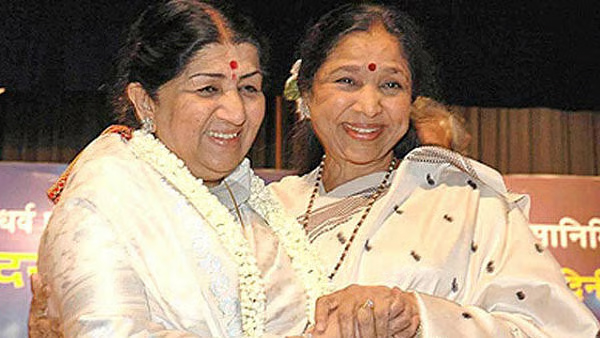
Adding an emotional layer to the occasion, Anand Bhosle shared, “When Asha Tai came to know that this hospital carried her and Didi’s name, she was deeply moved. This was perhaps the first time in the world that two sisters were being honoured together through a hospital.
“She had just released a globally trending song, yet she asked what she should wear for this day. She was told blue would be lucky, and that is why I wore blue.
“Before coming here, I was emotional. Aai told me, ‘Wear dark glasses. Don’t cry. You belong to the Shivaji Raje lineage.’“My mother always believed in the future of the next generation. She said Zanai would take her legacy forward. Even A.R. Rahman had said that four generations of this family had lived only for music, and that legacy would continue.
“Today, Aai may not be physically present, but her message remained—Jai Hind, Jai Maharashtra.”

LataAsha Mangeshkar Institute of Medical Sciences Foundation Stone Ceremony & Condolence Meet Held in Pune Today
Pune: Pune witnessed a deeply emotional and significant milestone as the Foundation Stone Ceremony of the LataAsha Mangeshkar Institute of Medical Sciences took place at Nandoshi, Sinhagad Road. The occasion was marked by a solemn Shraddhanjali Sabha, bringing together dignitaries, family members and well-wishers to pay tribute while taking a meaningful step towards building a landmark healthcare institution.
The programme was presided over by Dr. Mohanji Bhagwat (Sarsanghchalak, Rashtriya Swayamsevak Sangh). Shri Devendra Fadnavis (Hon’ble Chief Minister of Maharashtra), along with Shri Eknath Shinde (Hon’ble Deputy Chief Minister of Maharashtra) and Smt. Sunetra Pawar (Hon’ble Deputy Chief Minister of Maharashtra) graced the occasion as Chief Guests. Members of the Mangeshkar and Bhosale families were also present. Envisioned as a state-of-the-art centre of excellence, the LataAsha Mangeshkar Institute of Medical Sciences was designed as a comprehensive healthcare and education ecosystem spread across 40 acres. The project included a superspeciality hospital, a medical superspeciality hospital, a dedicated palliative care centre, and a psychiatry hospital addressing mental health needs.
The campus also provided affordable accommodation for patients’ relatives, a nature cure institute promoting holistic healing, and a small animal veterinary hospital. In a significant step towards education, the Maharshi Karve Women’s Education Centre established a medical college within the campus, positioning the institute among the leading healthcare and academic hubs in Asia, revealed Dr. Dhananjay Kelkar, Medical Director, Deenanath Mangeshkar Hospital
Reflecting on the spirit of collective responsibility, Dr. Mohanji Bhagwat (Sarsanghchalak, Rashtriya Swayamsevak Sangh) urged everyone to take inspiration from the Mangeshkar family and carry the lamp of seva forward. He said, “Each one of us must contribute our small share. No contribution is too small. When the squirrel offered its share, Lord Ram acknowledged it. What matters is not how big the effort is, but that it serves a larger purpose—of society, of the nation, of humanity.
“It is not just the individual who acts—the divine within us acts through us. Just as Govardhan was lifted with the support of every individual, collective effort sustains every great work. Small, sincere efforts, done consistently, become a force that can transform society.
“The Mangeshkar family has lived this spirit of devotion and action. There are two streams of dharma—action and renunciation—and the music of Lata Didi and Asha Tai embodies both, awakening a deeper purpose within society.
“Health and education must reach everyone and be made accessible to all, at one place. If we live with empathy, belongingness and commitment, the purpose of this institution will be fulfilled, and the suffering it seeks to address can one day be reduced—if we walk together.”
Reflecting on the emotional significance of the initiative, Pandit Hridaynath Mangeshkar shared, “Today, words fell short… because this was not just a tribute, it was a resolve. The voice and compassion of my sisters would live on through this institution. Service was the highest form of devotion, and through this effort, we offered them our true homage.” Adding a note of resolve and tribute, Shri Devendra Fadnavis (Hon’ble Chief Minister of Maharashtra) said, “I was worried whether this programme would happen. When we had decided on the date, everything was going well. Then, just four days ago, Asha Tai suddenly left us. We thought the programme would be postponed.“But the Mangeshkar family and the Trust took a collective decision—Asha Tai’s life was always a celebration. The truest tribute was to ensure that the programme happened as planned.
“Theirs is not just a musical family, but an immensely patriotic one. Their devotion to Swatantrya Veer Savarkar and their commitment to the nation was well known. The Dinanath Mangeshkar Hospital had already served countless patients, and I was confident that the same spirit would now be visible through this institution.'Fadnavis requested themayir to ensure broad roads, water, and said that the government on its part should try and subsidise the FSI to enable such noble institutions to serve better.
Quoting P. L. Deshpande, till such time as the sun and the moon exist, the voices of Lata Didi and Asha Tai would continue to echo across the skies.”
Shri Eknath Shinde (Hon’ble Deputy Chief Minister of Maharashtra) emphasized the importance of integrating healing with culture, suggesting that music therapy initiatives be explored within the institution, where the voices of Lata Didi and Asha Tai could continue to bring emotional strength and solace to patients.
Adding an emotional layer to the occasion, Anand Bhosle shared, “When Asha Tai came to know that this hospital carried her and Didi’s name, she was deeply moved. This was perhaps the first time in the world that two sisters were being honoured together through a hospital.
“She had just released a globally trending song, yet she asked what she should wear for this day. She was told blue would be lucky, and that is why I wore blue.
“Before coming here, I was emotional. Aai told me, ‘Wear dark glasses. Don’t cry. You belong to the Shivaji Raje lineage.’“My mother always believed in the future of the next generation. She said Zanai would take her legacy forward. Even A.R. Rahman had said that four generations of this family had lived only for music, and that legacy would continue.
“Today, Aai may not be physically present, but her message remained—Jai Hind, Jai Maharashtra.”